Our last post mentioned Sir John de Poulteney (or Pulteney) who once owned a house called Coldharbour, and I promised more of Sir John, four times mayor of London. First, I should point out that I was somewhat lax in my language. Sir John held the position of Lord Mayor of London: that is, mayor of the City of London, as distinct from the mayor of London.
According to the Oxford Dictionary of National Biography, “Pulteney became a wealthy merchant who dealt in wool and wine and traded overseas. He was a draper and moneylender with extensive business dealings among the foreign merchants in London. He supplied the king’s wardrobe and the royal army overseas in 1338.”
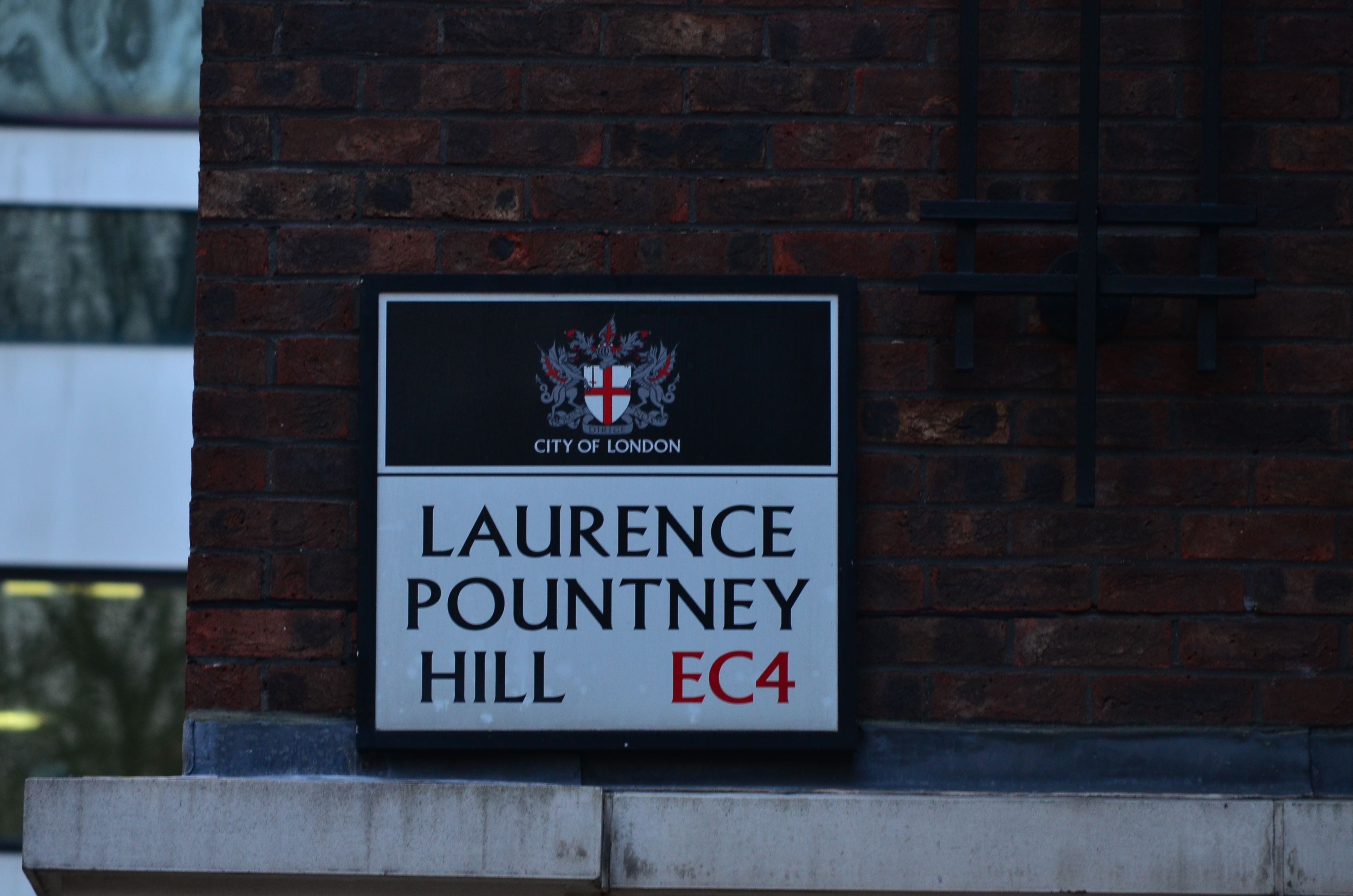
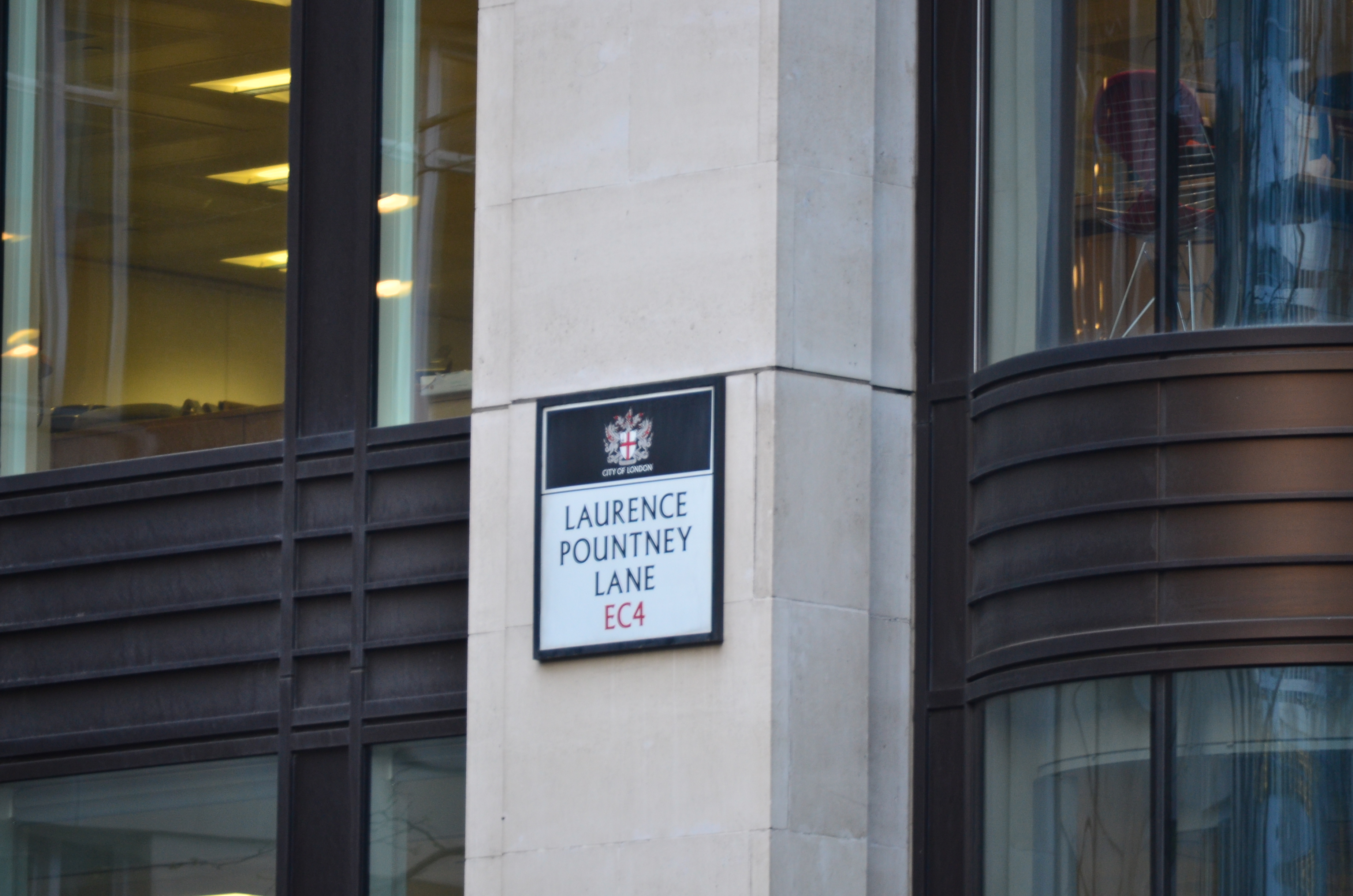
Sir John is linked to the Roman Catholic martyr St Lawrence: both men gave their names to Laurence Pountney Hill and Laurence Pountney Lane. Sir John lived near to the church dedicated to St Lawrence, and both names were combined (and altered slightly) to become Laurence Pountney.
One 19th-century scholar of London street names, FH Habben, notes that the lane and hill were once Lawrence Poulteney and goes on to say, “Sir John Poulteney (the l in whose name has, for some reason, probably a mistaken idea of euphony, been displaced by ‘n’ in the naming of the locality) was one of London’s worthiest and most munificent citizens – a draper, and four times Mayor.”
St Lawrence, the patron saint of the poor, of cooks, and of comedians, was one of the seven deacons of the city of Rome under Pope Sixtus II who were martyred in the persecution of the Christians ordered by the Emperor Valerian. The officials of Rome demanded that Lawrence hand over the riches of the church, at which point he presented the sick and the poor to whom he had distributed said riches. Hence his adoption as patron saint of the poor.
This didn’t go down well with the Prefect of Rome, who ordered St Lawrence to be roasted to death on a gridiron. During the process, St Lawrence reportedly said to his torturers, “I am cooked on that side; turn me over, and eat.” Hence him becoming patron saint of cooks – and of comedians.
Back, briefly, to Laurence Pountney Hill: in 1556, it was ‘the lane called grene lettyce’ and in 1646 William Harvey, who discovered the circulation of the blood as well as being physician to Charles I, moved to Laurence Pountney Hill with his brother.

 thestreetnames
2 responses to “Coldharbours, cooks and comedians”
I was left wondering if Great Pulteny Street in Soho had anything to do with him. It was not unusual for the spelling of such names to be corrupted over time. Though I suspect it might be named after an architect. https://greatpulteneystreetsoho.co.uk/
Best wishes, Pete.
Thanks, Pete. I shall look into it. All the best, Elizabeth